
What a plot tells you before the laboratory does
A morning on a client's vegetable plot. Water standing in the furrows, a surface that seals and cracks as it dries, and the first repairs going in: beds, mulch and a fresh transplant.
We spent a morning on a client's vegetable plot. No equipment beyond a hoe, a notebook and a phone camera. A visit like this does not replace a soil test, and it is not meant to. It is there to catch the things a laboratory report will never show you: where water sits, how the surface behaves once it dries, and what the farmer has already worked out on their own.
The surface was already talking
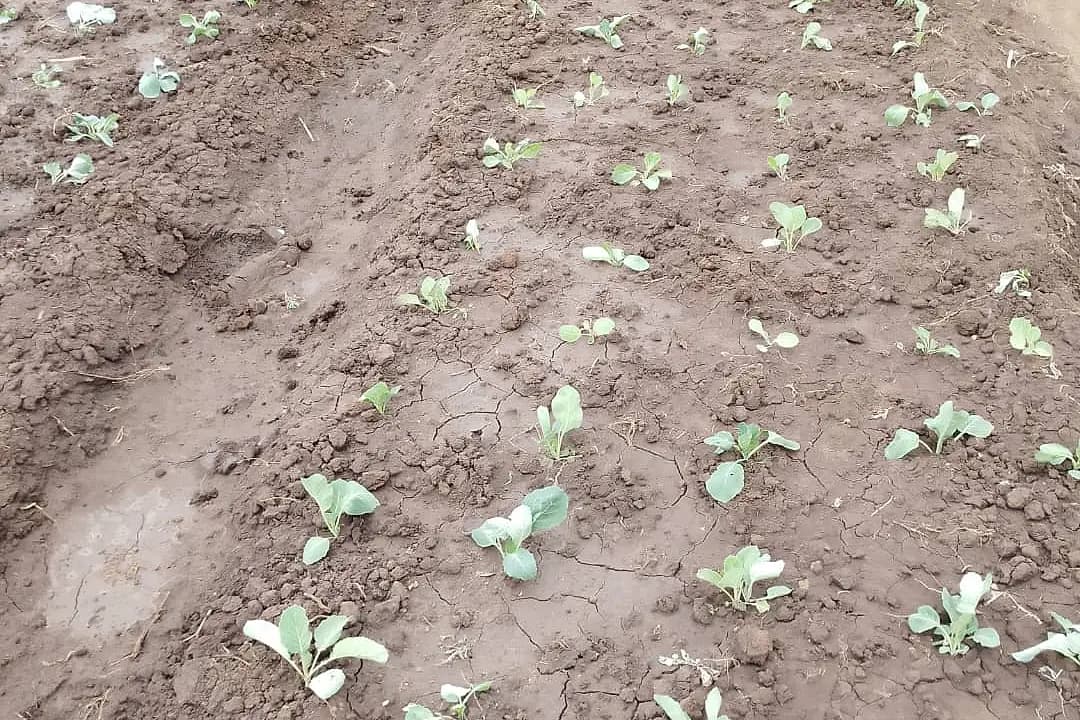
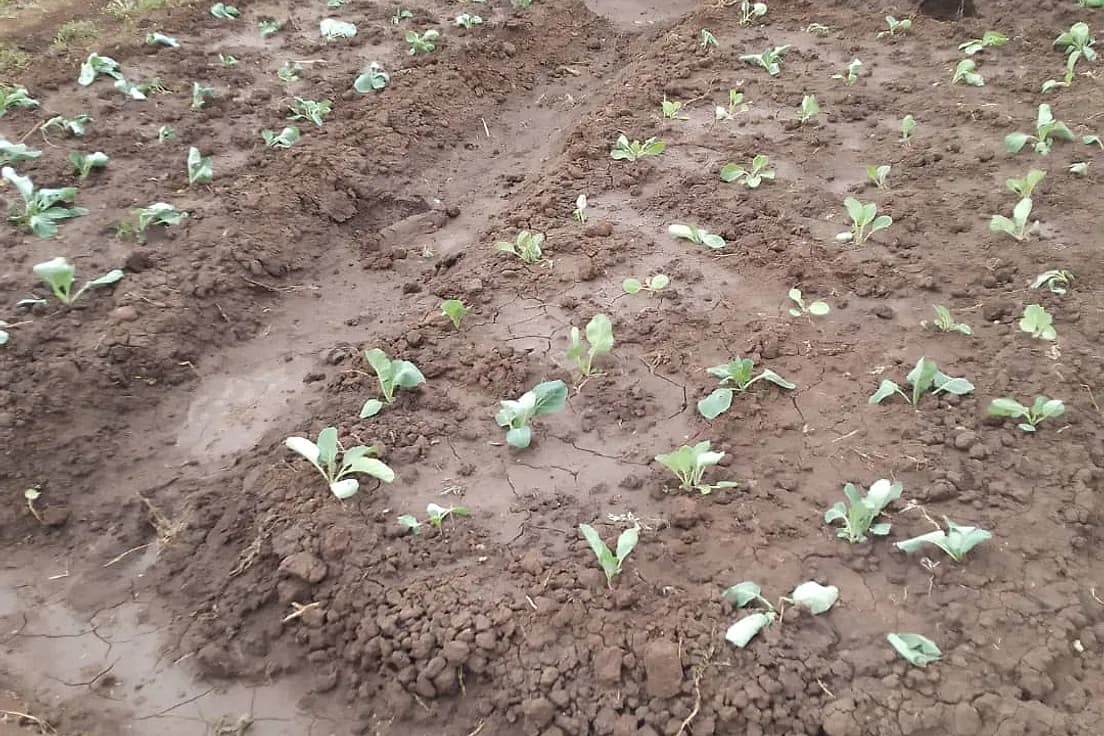
The most useful thing on this plot was the top two centimetres. Where water had stood and then dried, the soil had set into a smooth seal and split into a network of cracks. You can see it clearly in the middle of the bed below, while the farmer works the ground alongside it.
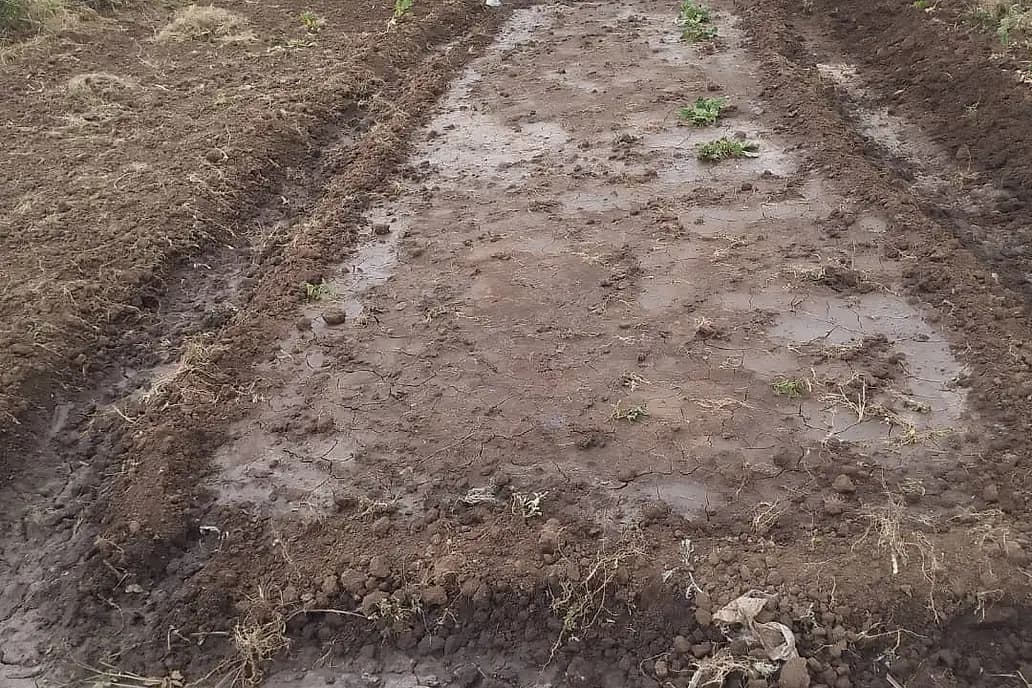
A crust like that points to soil holding little organic matter, where the crumbs collapse instead of holding their shape once they are wet. Two problems follow. Water runs off instead of moving down into the root zone, and young seedlings have to push through a hard lid before they ever reach the light.
Water was not going anywhere
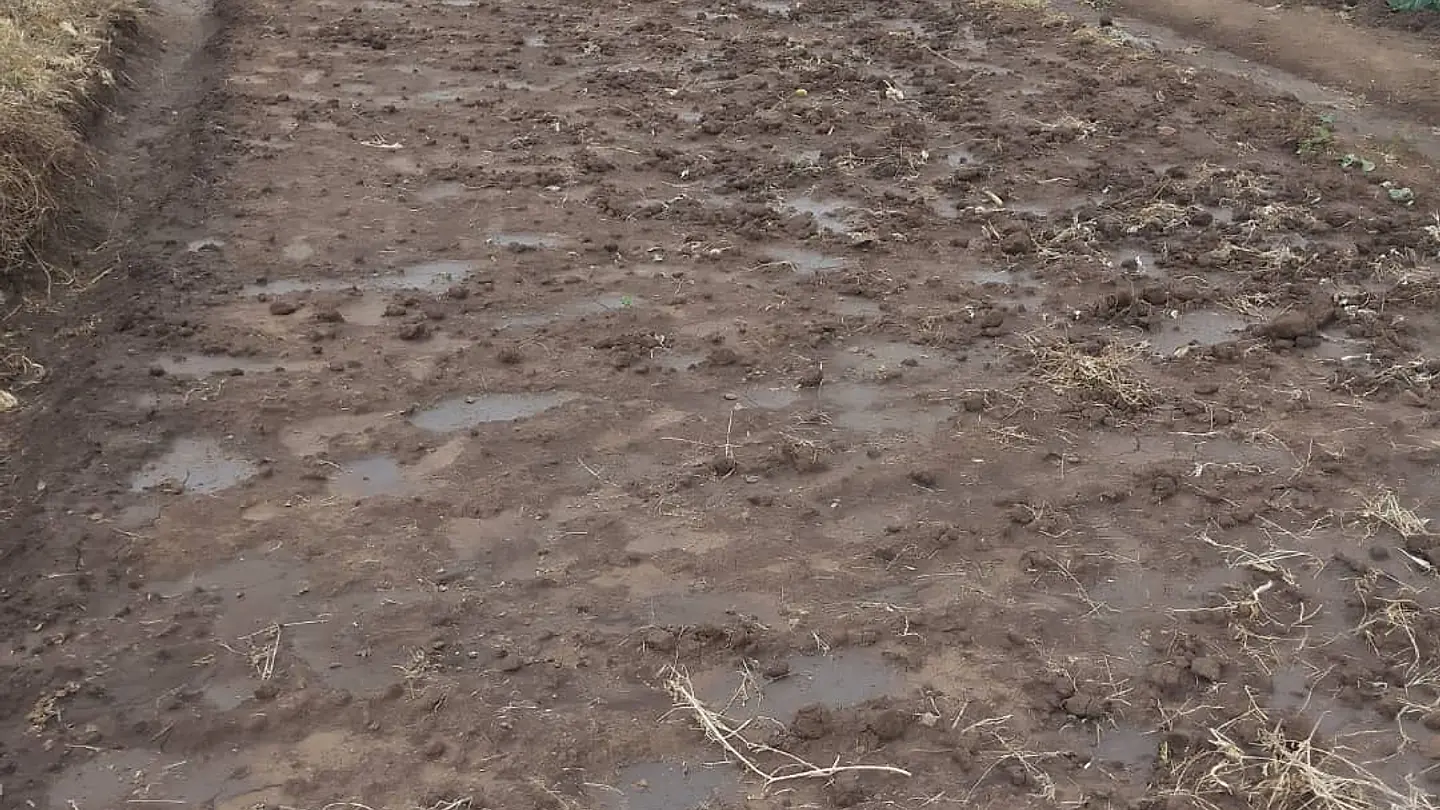
The furrows told the same story from the other direction. Hours after watering, they were still holding standing water rather than letting it move down through the profile. On soil with working structure, that water would already have gone.
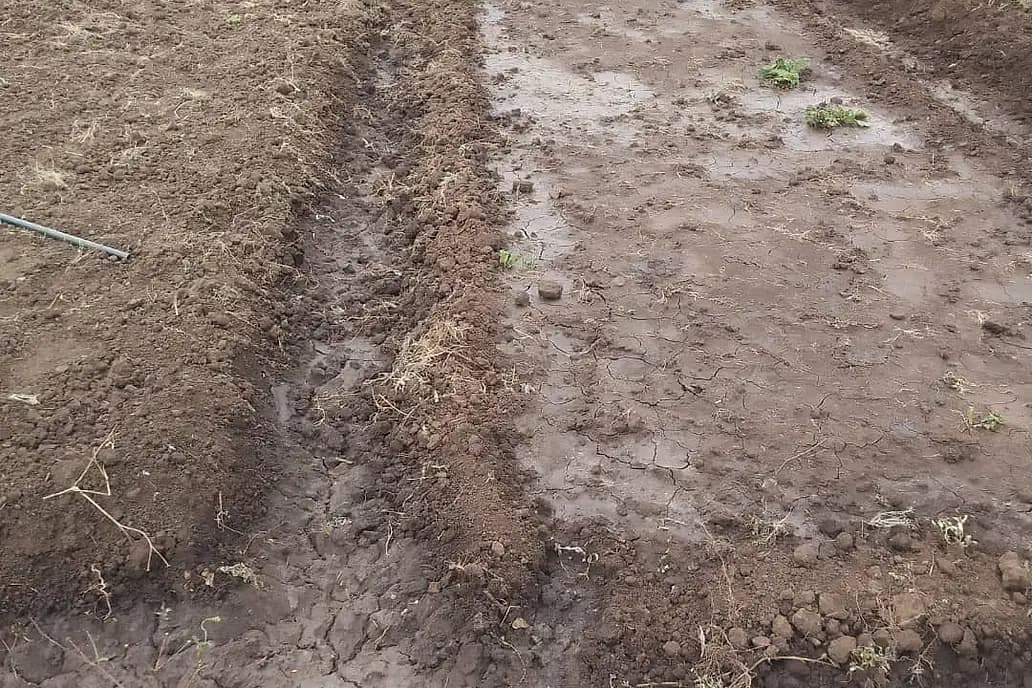
You learn more about a soil from how it behaves the day after water than from how it looks the day before.
This matters because the same plot clearly can produce. Look past the wet bed and there is established cabbage doing perfectly well a few metres away. The land is not finished. It is being held back by structure and water movement, which are both things you can work on.
The beds were the right instinct
The farmer had already shaped raised beds with furrows between them, which is exactly the right response to water that will not drain. It lifts the rooting zone above the wettest ground and gives surplus water somewhere to go. What beds cannot do on their own is fix the surface, and that is where the crusting was still winning.
Mulch was the first repair
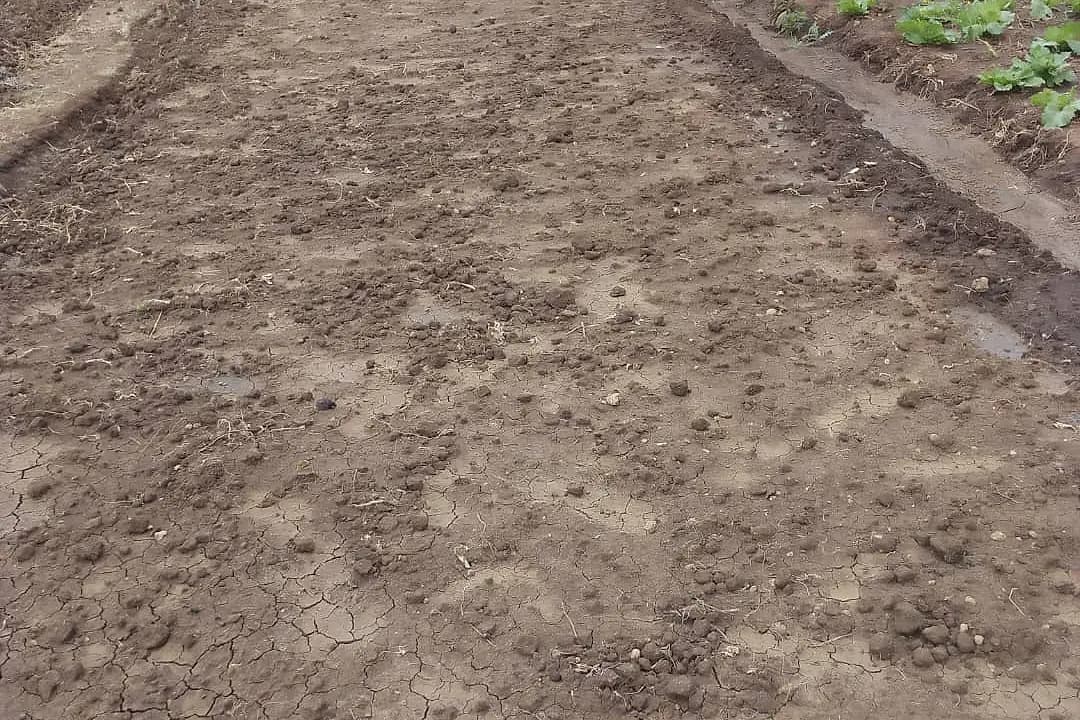
Dry grass went straight over the beds. Of everything done on the plot that morning, this is the cheapest and probably the most valuable. It takes the impact of falling rain off the bare surface, which is what drives sealing in the first place. It slows evaporation so the bed does not bake hard between waterings. As it breaks down it feeds the soil life that builds the crumb structure the plot is short of.
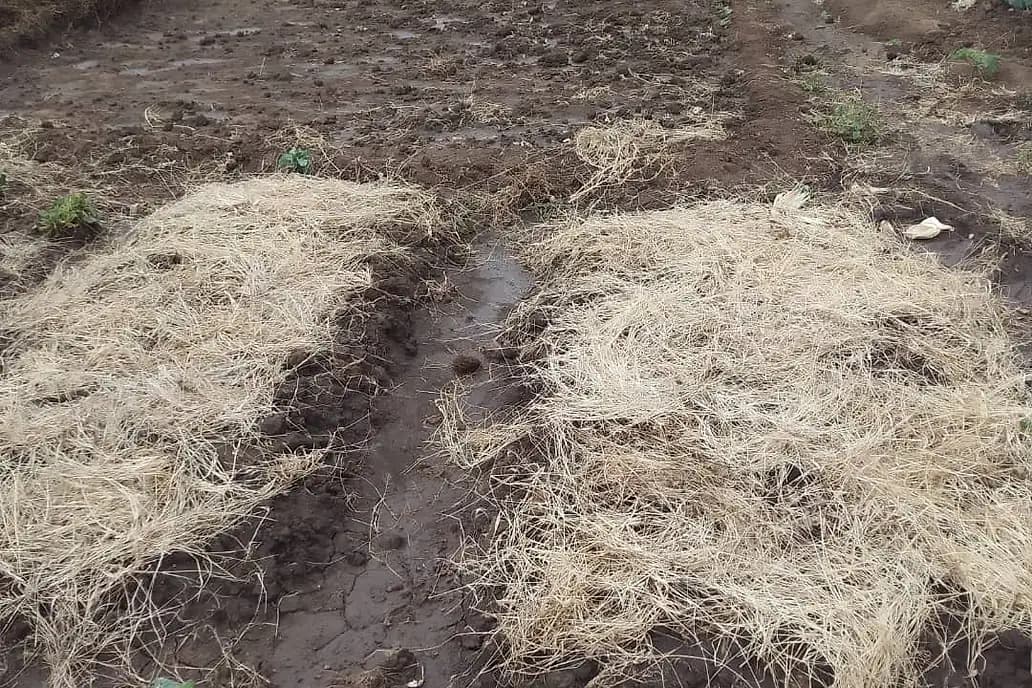
This is the part of agroecology that gets underrated. Nothing was bought. The material was already on the farm, and the practice does more for the surface of this plot than any input we could sell.
Then the crop went in
Brassica seedlings were transplanted across the prepared beds, spaced out and firmed in. They go into ground that is still difficult, which is honest about where this plot is right now. The repairs have started, and they have not finished.
What happens next
Observation gives you the questions. The laboratory gives you the answers you can act on with any confidence, which is why a visit like this is the beginning of the work and not the whole of it.
The plan from here
- Sample the plot properly and run a Standard Fertility Analysis, with organic carbon the number we care most about on this ground
- Watch how the mulched beds behave after the next real rain, against the beds left bare
- Keep the mulch topped up rather than letting it thin out between seasons
- Return once the crop is established, and compare what the surface is doing then
None of this is dramatic. Soil restoration rarely is. It is a sequence of small correct decisions, repeated over seasons, with somebody keeping a record of what actually changed.
Your plot
If your beds seal and crack like this, the reading is worth doing before the spending.